|
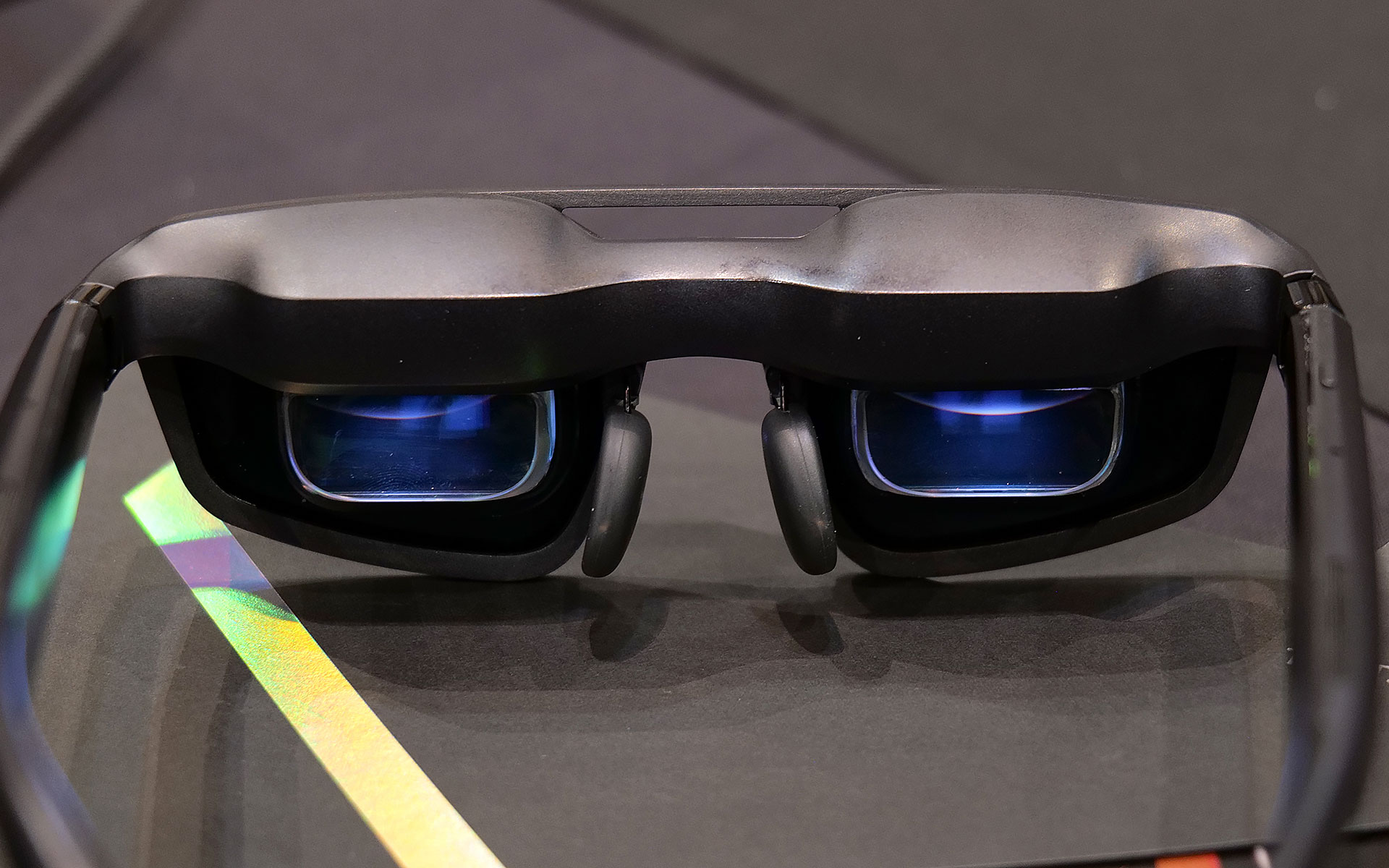
The latest generation of smartglasses can create huge virtual screens without the need to lug around giant monitors are a real boon to frequent travelers. However, their specs aren't often tailored to the needs of gamers, so at CES 2026, ASUS and XREAL partnered to make a pair with two very important features you don't normally get from rivals.
The new ROG XREAL R1 AR glasses are based on the existing XREAL One Pro, so naturally they share a lot of the same components and specs including dual micro-OLED displays with a per-eye resolution of 1,920 x 1,080, three degrees of freedom (natively), 700-nit peak brightness, 57-degree FOV and built-in speakers tuned by Bose. However, the big difference on the R1s is that instead of maxing out with a 120Hz refresh rate, ASUS and XREAL's collab goes all the way up to 240Hz. That's a pretty nice bump, especially for people with older hardware or anyone who might not have access to a high refresh rate display or just doesn't want to lower their standards while traveling.
The ROG XREAL R1 AR smartglasses deliver 1,920 x 1,080 resolution to each eye with a 240Hz refresh rate and 57-degree FOV. Sam Rutherford for EngadgetThe other big addition is the R1's included ROG Control Dock, which from what I've seen is slightly better suited for home use. It's designe
|
|
We've spent the last few days exploring the latest and coolest consumer tech and gadgets. You could be using them next.
|
RELATED ARTICLES | | |
|
One way you can reduce the number of cables you have to deal with on the regular is by investing in a few wireless chargers. Those with iPhones should consider Apple's own MagSafe charger not only because of its sleek and effective design, but also because it's on sale right now at Amazon. The Qi2.2-rated MagSafe charger is down to $30 for the one-meter version, or $40 for the two-meter version.
If you have an iPhone 16, iPhone 17 or iPhone Air, this cable can charge your device at 25W as long as it's connected to a 30W power adapter on the other end. While you'll need a more recent iPhone to get the fastest MagSafe c
|
|
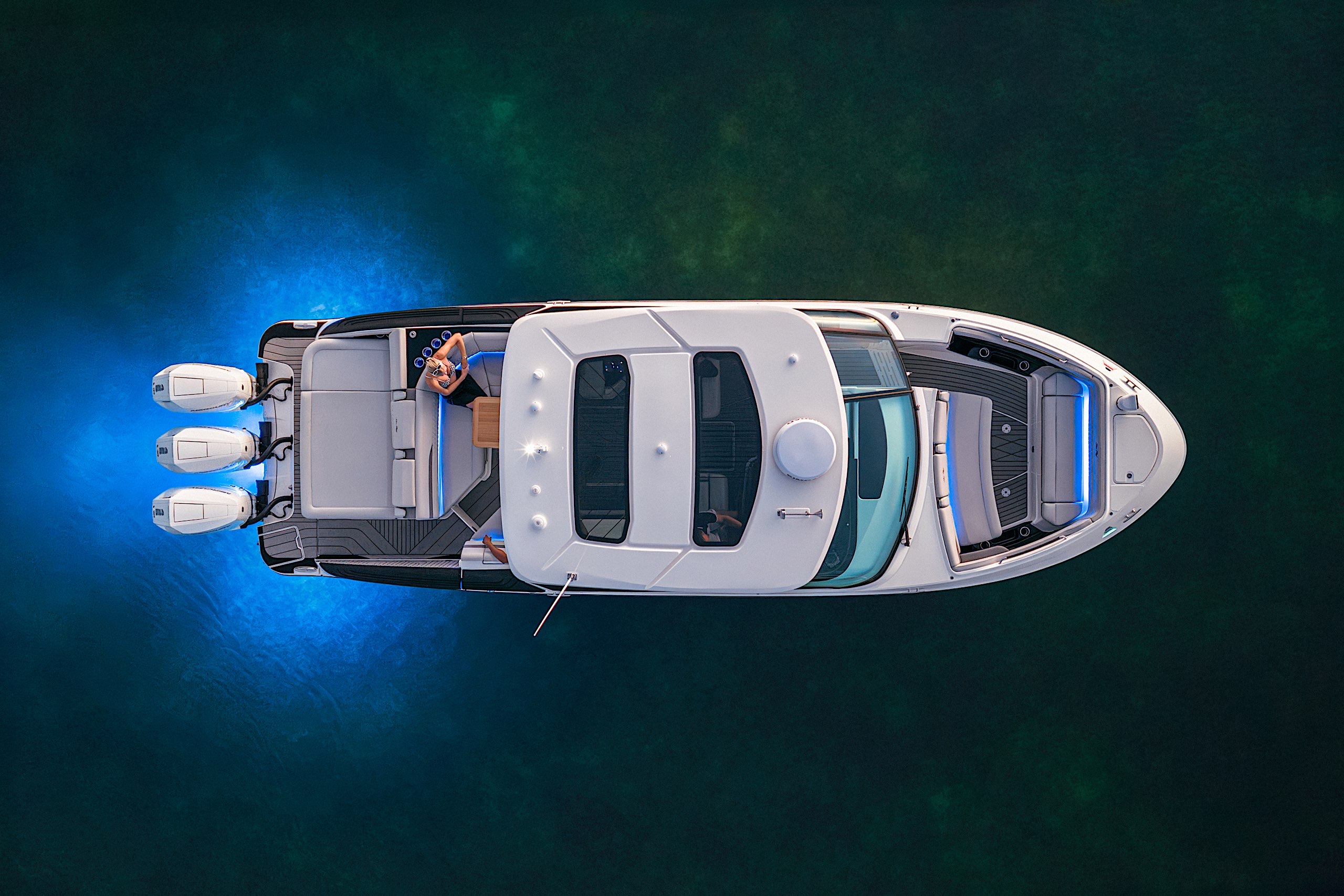 If you've never docked a boat before, consider yourself lucky. There are plenty of popular TikTok channels devoted to shaming those who bring their craft back home clumsily or berth them with something less than finesse. Tricky crosswinds, unpredictable surf and even the jeers of passersby can make it a stressful experience at the best of times. If you've never docked a boat before, consider yourself lucky. There are plenty of popular TikTok channels devoted to shaming those who bring their craft back home clumsily or berth them with something less than finesse. Tricky crosswinds, unpredictable surf and even the jeers of passersby can make it a stressful experience at the best of times.
Brunswick, which owns more than 50 water-borne brands like Sea Ray, Bayliner and Mercury Marine, has a solution. It's demonstrating some self-docking tech called AutoCaptain at CES 2026 that makes this process a cinch, plus a fleet of other innovations that, in some cases, leave some of the smart cars on the show floor looking a bit remedial.
One of those technologies is edge AI. While in-car AI is an increasingly common feature, those agents are exclusively running remotely, relying on cellular connections to offload all the processing power required to drive a large language model.
Sadly, that won't always work on a boat.
One of Brunswick's tech-equipped boatsBrunswick"One of the things about AI for boats
|
RELATED ARTICLES | | |
|
When LG announced that it would demo a laundry-folding, chore-doing robot at CES 2026, I was immediately intrigued. For years, I've wandered the Las Vegas Convention Center halls and wondered when someone might create a robot that can tackle the mundane but useful tasks I despise like folding laundry. With CLOiD (pronounced like "Floyd"), LG has proven that this is theoretically possible, but probably not likely to happen any time soon.
I went to the company's CES booth to watch its demonstration of CLOiD's abilities, which also include serving food, fetching objects and fitness coaching. During a very carefully choreographed 15-minute presentation, I watched CLOiD grab a carton of milk out of the fridge, put a croissant in an oven, sort and fold some laundry and grab a set of keys off a couch and hand them to the human presenter.
Throughout the demonstration, LG showed off how its own appliances can play along with the robot. When it rolled over to the fridge, the door automatically opened, as did the oven. When the LG-branded robot vacuum needed to move around a hamper, CLOiD helpfully cleared the path. But the robot also moved very slowly, which you can see in the highlight video below.
The appliance maker is selling the setup as a part of its vision for a "zero labor home" where its appliances and, I guess, robotics technology can come together to take care of all your chores and household upkeep. Maybe I'm jaded from a decade of watching CES vaporware,
|
|
Anker, one of the leaders in third-party chargers, has unveiled a new portfolio of "smart" chargers and docks at CES 2026. The company says the lineup adds improved visual interfaces, faster Qi2 wireless charging and "upgraded ecosystems" for the latest line of iPhone models.
First up is the Anker Nano Charger with smart display, which features a tiny screen, 180-degree foldable prongs and provides up to 45W of power. The plug can identify the exact iPhone model connected and then deliver the right amount of power for your phone. Anker says the Nano uses three-stage power delivery and a "Care Mode" that the company claims keeps batteries cooler than some competing 45W chargers. It arrives in late January 2026 and will retail for $40.
For fans of wireless charging stations, the Anker Prime Wireless Charging Station offers a 3-in-1 solution for iPhone, Apple Watch and AirPods. It uses a "AirCool" system for "faster, safer performance" and offers up to 25W of Qi2 wireless power. The design is also foldable for compact travel. It's set for release in Q1 2026 and will retail for $150.
The company debuted a clamp-on 10-in-1 Nano Power Strip with 70W of output and built-in surge protection. It sports two USB-C ports, two USB-A ports and six AC outlets. The Nano Power Strip is getting a late January release, and it will sell for $70.
Anker also unveiled a 13-in-1 Nano Docking Station. This serves as an all-in-one hub with support for up to three displays (with 4K resolution supported on a single display), up to 100W of upstream charging and 10 Gbps of data transfer between connected devices. It also features a
|
|
Throne has rocked up to CES 2026 to show off its forthcoming toilet computer which uses computer vision to study your poop. It hangs from the side of the bowl and has a camera and microphone to track bowel motions and urination and offer feedback. It was co-founded by (activity tracker) Whoop co-founder John Capodilupo, who explained the hardware is designed to understand what your base state is to be able to identify when you fall out of that pattern.
Capodilupo explained the hardware will look at how often you go, the texture and size of your motions, as well as the volume. The eventual aim is to be able to analyze your gut health, adding that as a GLP-1 user, that sort of data is vital to manage the symptoms of those drugs. The battery lasts for a month on a single charge but you won't be forced to drag it out of the bathroom to re-juice it. The device ships with a 13 foot long USB-C power cable which should stretch long enough from your nearest outlet to the toilet.
At this point, we can't talk to its efficacy but will certainly be looking to test this thing when it arrives at some point in February. Pre-orders are open, and it can currently be picked up for $340, plus a $6 per month membership.
This article originally appeared on Engadget at https://www.engadget.com/home/smart-home/throne-from-the-co-founder-of-whoop-uses-computer-vision-to-study-your-poop-150000606.html?src=rss
|
|
A new probeless smart oven uses cameras and weight sensors to identify the precise geometry of the food you stick inside.
|
|
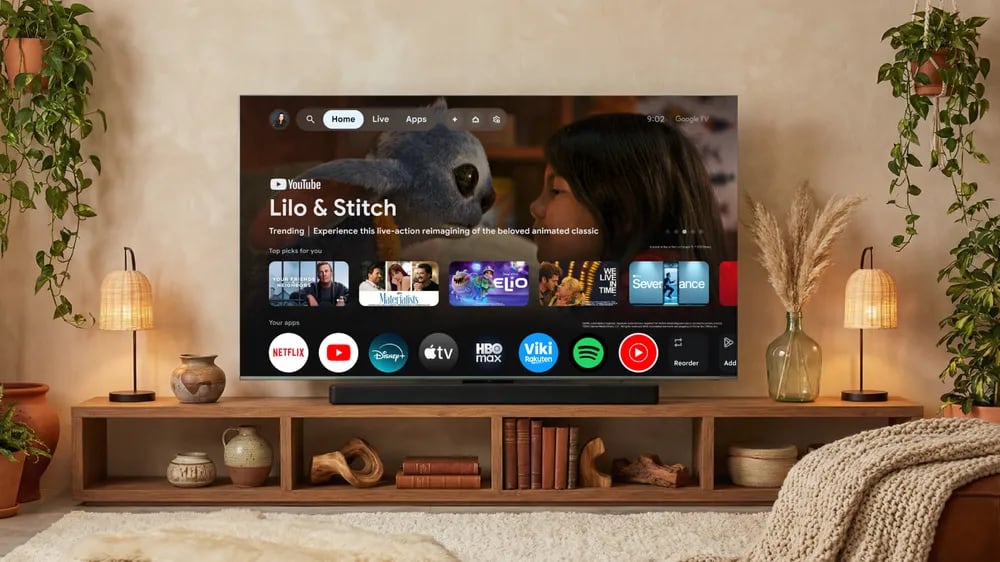 At CES 2026, Google announced some new Gemini features that it's bringing to Google TVs. Google TV is built into some TV sets and set-top boxes, and while it may not be immediately relevant to many Apple users, it does give us a look at what AI can do on a TV set. At CES 2026, Google announced some new Gemini features that it's bringing to Google TVs. Google TV is built into some TV sets and set-top boxes, and while it may not be immediately relevant to many Apple users, it does give us a look at what AI can do on a TV set.
|
|
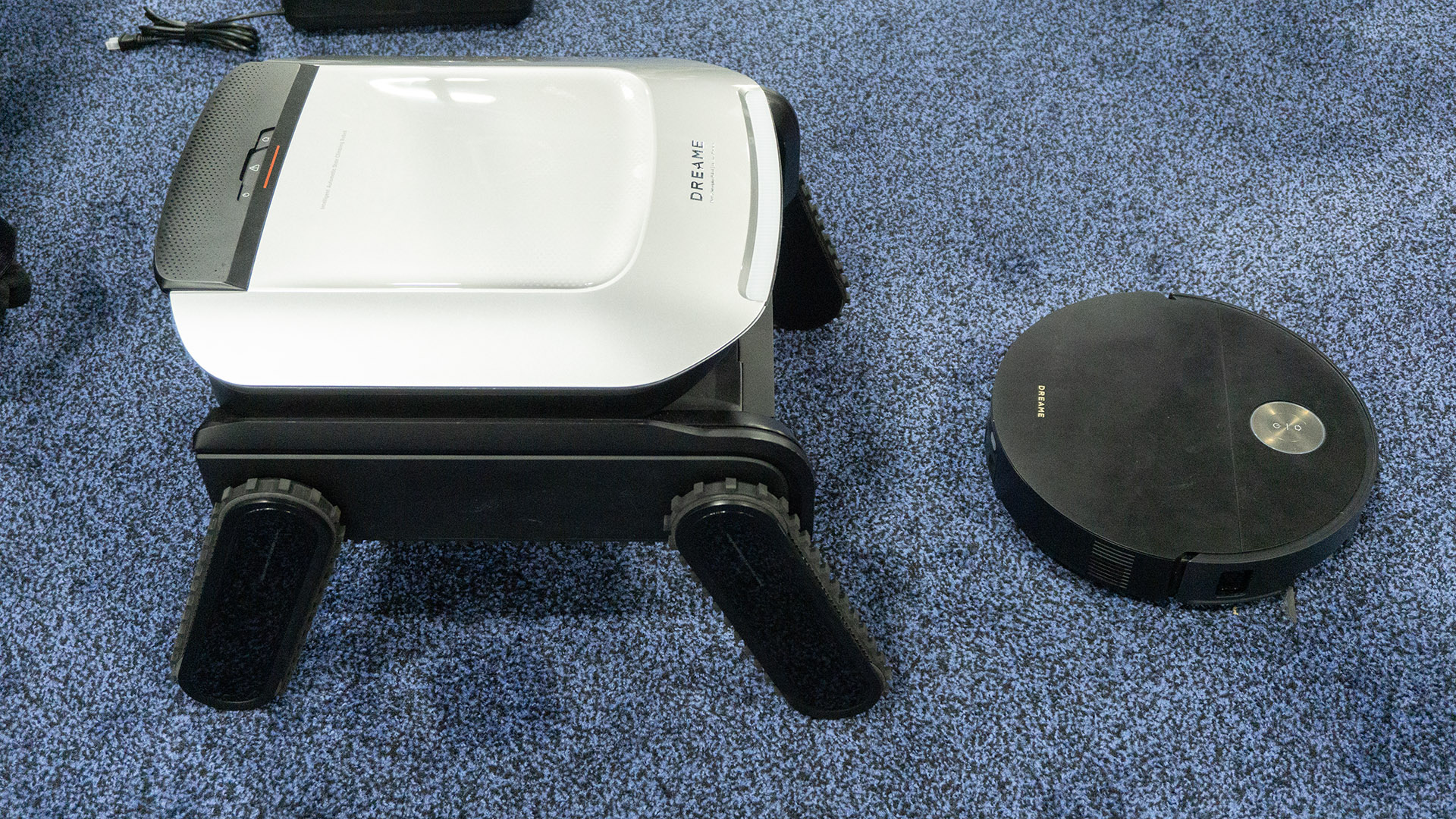 Robot vacuum companies are once again trying to outdo each other at CES 2026. This year, Chinese appliance maker Dreame is showing off a prototype of a device that can climb up and down an entire flight of stairs. Robot vacuum companies are once again trying to outdo each other at CES 2026. This year, Chinese appliance maker Dreame is showing off a prototype of a device that can climb up and down an entire flight of stairs.
The concept, called the Cyber X, was previewed last year at IFA in Berlin. The vacuum sports a somewhat terrifying set of legs with rubber treads that allow it to autonomously navigate multi-story environments. While Dreame has previously shown off vacuums that can move up smaller steps, it says the Cyber X can climb stairs up to 25cm (9.8 inches) high and slopes up to 42 degrees. It can manage both straight and curved staircases, and can climb a flight of steps in 27 seconds, according to the company.
In addition to its legs, the Cyber X also has a built-in water tank to support mopping abilities, and a laser-powered navigation system to help it maneuver up stairs and around other obstacles. It also has a braking system that allows it to stay stable on floors and stairs, even if the battery dies. We haven't been able to see it in action yet, but Dreame is expected to show off its abilities at its CES booth and we'll update this post once we're able to get an up-close look.
Dreame's Cyber X concept and the X60.Karissa Bell for EngadgetFor now, Dreame says Cyber X is just a research prototype and hasn't indicated if it plans to make it, or a robo vac like it, more widely available at some point
|
|