|
NASA's Artemis II crew just set a new distance record in miles traveled away from Earth. The team of four astronauts are in the process of circling the Moon, reaching 5,000 miles beyond the natural satellite. That brings the total distance traveled away from our home to over 250,000 miles. Gene Roddenberry would be proud.
This broke the previous 1970 record set by Apollo 13's crew by around 4,000 miles. The four astronauts - Reid Wiseman, Victor Glover and Christina Koch of NASA and Jeremy Hansen of the Canadian Space Agency - are the first humans to cross the lunar threshold since 1972's Apollo 17 mission.
"We challenge this generation and the next to make sure this record is not long-lived," Commander Reid Wiseman said upon crossing the distance threshold. He also suggested that NASA name a lunar crater after the craft itself.
The astronauts aren't landing on the lunar surface, but are conducting a lengthy flyby that should provide clear images of the Moon's far side "that have never been seen" by humans. These areas were too difficult to clearly see by the various Apollo crew members. They'll also get a peek at a solar eclipse, though the crew will be out of contact with mission control for around 40 minutes.
"We'll get eyes on the moon, kind of map it out and then continue to go back in force," NASA flight director, Judd Frieling, said. Astronaut Christina Koch
|
RELATED ARTICLES | | |
|
NASA's Artemis II mission is about to make history. After a successful April 1 launch, and a trip of 39,000 miles through space, astronauts Reid Wiseman, Christina Koch, Victor Glover and Jeremy Hansen are about to travel farther from Earth than any human beings have before, and you can watch the entire thing unfold online. NASA will stream the entire flyby on YouTube and its own NASA website, with coverage beginning at 1PM ET. You can also watch NASA through Netflix.
|
|
Artemis II and its four-person crew have entered the Moon's "sphere of influence," meaning the spacecraft is more affected by lunar gravity than the Earth's pull. The transition occurred at a distance of 39,000 miles from the Moon, four days, six hours and two minutes into the mission. The next and most important phase will happen tomorrow when the craft loops around the Moon's far side, taking humans deeper into space than they've ever been before.
At their apogee, Astronauts Reid Wiseman, Christina Koch, Victor Glover and Canada's Jeremy Hansen will be 252,757 miles from Earth. That will break the previous record held by the Apollo 13 crew by just over 4,000 miles. They're the first humans to cross the lunar threshold since 1972's Apollo 17 moon landing mission.
The crew spent this weekend carrying out preparations for their lunar flyby. That included manual piloting demonstrations, reviewing their science objectives for the six-hour observation period and evaluating their space suits, which are there for life support in the event of an emergency and for their return home. But, they've had plenty of time to take in the views, too — and those views sure are spectacular. In the latest series of images shared by the space agency, the astronauts are seen gazing at Earth through the windows of the Orion spacecraft.
Orion will reach the moon's vicinity shortly after midnight on Monday, April 6. Later that day, the crew is expected to reach a point farther than any humans have traveled from Earth, surpassing the record of
|
|
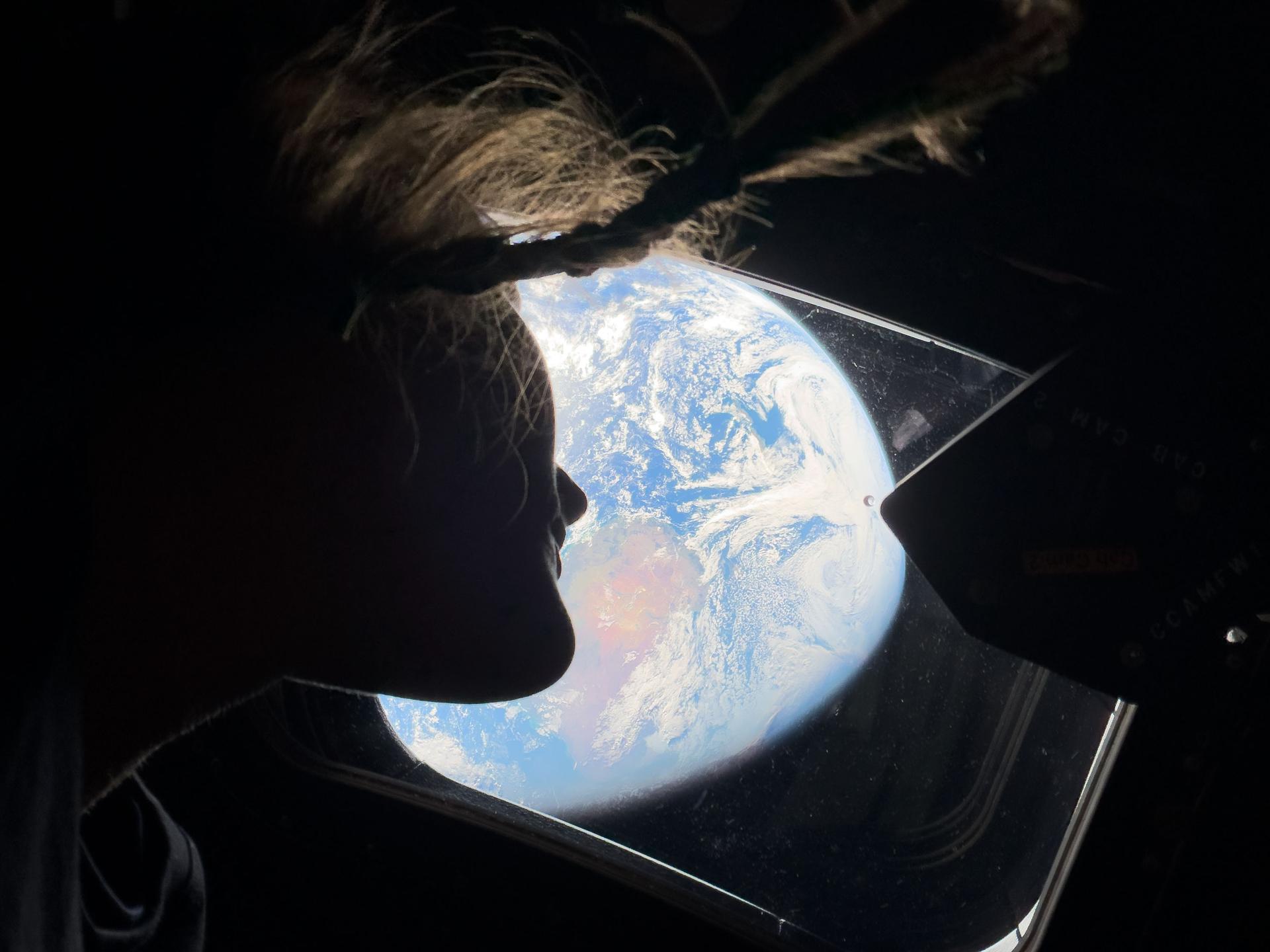 The Artemis II crew is almost at the moon, and the astronauts spent this weekend carrying out preparations for their lunar flyby on Monday. That included manual piloting demonstrations, reviewing their science objectives for the six-hour observation period and evaluating their space suits, which are there for life support in the event of an emergency and for their return home. But, they've had plenty of time to take in the views, too — and those views sure are spectacular. In the latest series of images shared by the space agency, the astronauts are seen gazing at Earth through the windows of the Orion spacecraft. The Artemis II crew is almost at the moon, and the astronauts spent this weekend carrying out preparations for their lunar flyby on Monday. That included manual piloting demonstrations, reviewing their science objectives for the six-hour observation period and evaluating their space suits, which are there for life support in the event of an emergency and for their return home. But, they've had plenty of time to take in the views, too — and those views sure are spectacular. In the latest series of images shared by the space agency, the astronauts are seen gazing at Earth through the windows of the Orion spacecraft.
Orion will reach the moon's vicinity shortly after midnight on Monday, April 6. Later that day, the crew is expected to reach a point farther than any humans have traveled from Earth, surpassing the record of 248,655 miles from Earth set by the Apollo 13 astronauts in 1970.
Mission specialist Christina Koch takes in the view.NASAThe lunar observation period will start at 2:45PM ET, and a few hours later, they'll be behind the moon and
|
|